Claims Evidence
Underground Water Leak Detection London
Before a buried leak becomes an insurance question it has to become your leak. The section of supply pipe running from the boundary into the building is normally the property owner's responsibility. The main in the road is the water company's. Establishing which side of that line the failure sits on decides whether this is a claim, a supplier job or neither.
Whose pipe, whose bill, whose policy
| Invoice line | How it is treated | When it is settled |
|---|---|---|
| Establishing the boundary and the responsible party | Decides whether this is a claim or a supplier job | First step, before surveying |
| Checking the supplier's own repair scheme | May remove the cost from your policy entirely | Worth doing before you notify |
| Tracing the run and pinpointing the failure | Detection line, fixed and agreed beforehand | Correlation then gas, same attendance |
| Excavating at the marked point | Access line, and a marked point keeps it one hole | Quoted after the trace |
| Reinstating drive, path or landscaping | Reinstatement, argued from the recorded location | Priced against the excavation actually taken |
Fee basis, not a quote, and not a statement of what your own policy covers. Our detection figure is fixed and confirmed in writing before anyone travels.
It is worth going one step further before anybody notifies an insurer. Several London suppliers operate schemes that will repair a leaking private supply pipe at no charge to the customer, subject to their own conditions. If one applies to your property it can take the entire cost out of your policy and off your claims history, which is a better outcome than any successful claim.
Where it is yours and a claim is the route, the survey has to do two things: fix the failure to a point so the excavation is one hole rather than a trench, and record the reasoning, because the reinstatement of a drive or a garden is usually the largest figure on the file and it is argued from how far the digging had to go.
A fixed detection figure confirmed before attendance, covering the trace and the written findings. Excavation, repair of the failed section and reinstating drives, paths or planting are quoted separately, because they reach your policy through different routes if they reach it at all.
What you get
- Comprehensive Leak Report: A detailed document formatted for claims submission, including methodology, evidence, and conclusions.
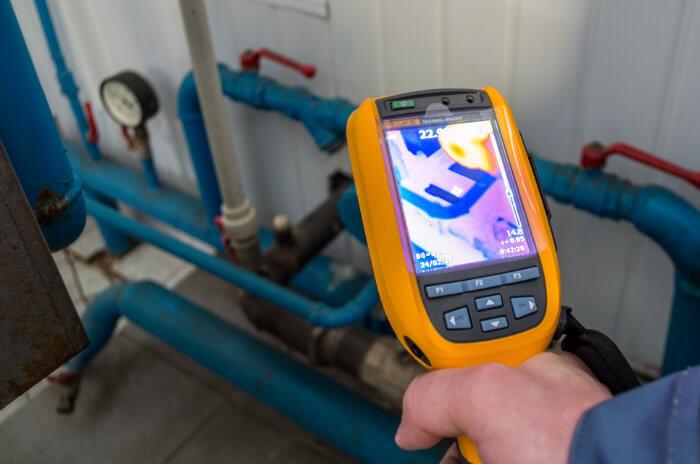
- Non-Destructive Prioritisation: We use acoustic listening devices, thermal imaging, and tracer gas to minimise invasive searching and control costs.
- Pinpoint Accuracy: Advanced correlation technology identifies leak locations to within a metre, providing exact excavation coordinates.
- 24/7 Emergency Response: Available for urgent incidents to mitigate damage and secure the site, with full documentation from the first call.
- London-Wide Coverage: Experienced across all boroughs and property types, from Chelsea townhouses to Docklands developments.
- Direct Liaison Offered: We can communicate directly with your insurer or loss adjuster to streamline the claims process upon request.
How it works
A method, not a guess
01
Establish the boundary and the owner
Where the supplier's responsibility ends and yours begins, and for a shared supply, who else is on it. That answer routes the whole file, and getting it wrong means paying for work on a pipe that was never yours.
02
Check the supplier scheme first
We ask whether your supplier operates a free repair scheme for private supply pipes and whether your property would meet its conditions. A repair you did not know was available is still a repair you paid for.
03
Measure the loss at the meter
Consumption recorded with the property isolated gives an objective figure that does not rely on anyone's opinion. It confirms a loss is genuinely running and gives the file a measurement an assessor can check.
04
Correlate, then fix the point with gas
Correlation along the run narrows it, tracer gas fixes it, and the marked position is photographed against fixed features. One hole in the right place is the difference between reinstating a metre of drive and reinstating all of it.
Six things to establish before treating a buried leak as a claim
Whose pipe is it?
The answer decides everything downstream. The main in the road belongs to the water company. The supply pipe running from the boundary to your building is normally the property owner's responsibility, and in a converted house or a block it may be shared, which brings in questions of apportionment between owners. People pay for work on pipes that were never theirs to pay for, and it is entirely avoidable. Establish the boundary and the configuration before any survey is commissioned, because occasionally the answer ends the matter there and costs you nothing.
Does your supplier run a free repair scheme?
Several water companies operate schemes that will repair a leaking private supply pipe at no charge to the customer, subject to conditions about the property, the pipe and sometimes how many times it has been used before. If one applies to you it is a better outcome than any successful insurance claim, because there is no excess and nothing appears on your claims history. Ask your supplier before you notify an insurer and before you instruct a contractor. A repair you never knew was available is still a repair you paid for.
Is underground pipe cover actually in your policy?
It is a separate item in many buildings wordings rather than something every policy includes, and it is one of the most common gaps people discover after the fact. Check your schedule for underground services or underground pipe cover specifically, and check the trace and access limit while you are there. Whether the failed pipe itself is covered, as opposed to the cost of finding and reaching it, varies considerably. Ten minutes with the schedule before instructing anyone changes what you ask for.
How precisely will the leak be located?
On a buried run this is the question that sets the bill, because the excavation and the reinstatement of whatever is above it usually cost more than the repair. Correlation along the run narrows it. Tracer gas fixes it. A trace that produces a marked point supports a single excavation at that point, and a trace that produces a stretch means digging the stretch. Ask what accuracy is expected before anybody arrives with a digger, and be sceptical of an answer expressed in metres.
Was the loss measured, not just asserted?
A meter reading taken with the property fully isolated gives an objective figure showing water leaving the system with nothing in the building using it. That measurement does not depend on anyone's judgement, and it is the kind of evidence that settles an argument quickly. It also distinguishes a genuine underground loss from an internal fault or a passing valve. It takes very little time and a surprising number of surveys never record it, which leaves the whole file resting on the contractor's opinion.
Who is reinstating the surface, and on what basis?
Driveways, block paving, resin surfaces, paths and established planting are expensive to put back and are frequently discovered to belong to nobody once the pipe is mended. Establish before the dig who is quoting for reinstatement and what standard they are working to, and get the figure separated from the excavation and the repair. A block paved drive that has to be relifted and relaid is a different conversation from a patch, and it is a much easier conversation to have beforehand.
Compare like for like
Whose pipe it is decides whose problem it is
A buried leak raises a question of ownership before it raises a question of cover. The supply pipe from the boundary into the building is normally the property owner's, the main in the road is not, and several London suppliers run schemes that will repair a private supply pipe at no charge. Settling that first can take the whole thing out of your policy.
| What to check | A one line invoice | A dig and hope firm | Emergency Leak Detection 247 |
|---|---|---|---|
| Ownership established first | Never raised. You are invoiced for work on a pipe that may not have been yours to pay for. | Not their question. They quote for the excavation in front of them. | We establish where the boundary falls and who carries the run before a survey is booked, because the answer sometimes ends the job there. |
| Supplier repair schemes | Not mentioned. A free repair you never heard about is still a repair you paid for. | Unlikely to come up, since it removes the work. | Where the supplier operates a scheme for private supply pipes we tell you before you instruct us or notify an insurer. |
| Locating before excavating | Approximate at best, so the trench is long and the reinstatement is expensive. | The trench is the diagnostic. You pay in driveway and landscaping for information a survey would have given you. | Correlation along the run, then tracer gas to fix the point, so one hole goes in where the failure actually is. |
| What the reinstatement line rests on | Nothing written, so the size of the excavation cannot be justified afterwards. | Nothing written, and the excavation is usually larger than anything a report could justify. | The recorded location and the reasoning behind it, which is what the reinstatement figure is argued from when an insurer looks at it. |
| Continuous consumption evidence | Not gathered. Without it there is no independent confirmation that a loss was running at all. | Not gathered, because the trench is expected to prove it. | Meter behaviour is recorded with the property isolated, which gives the file an objective measure that does not depend on our opinion. |
| How it is invoiced | One figure for finding, digging, mending and making good, which insurers routinely send back. | One figure dominated by groundwork, with detection folded invisibly into it. | Trace, excavation, repair and reinstatement on four lines, since only some of them are ever going to be covered. |
| If the run is clear | You have paid for a trench and learned nothing. | You have paid for a longer trench and learned nothing. | A documented clear result redirects the investigation to internal pipework or the supplier's side, and the detection fee is waived on a confirmed loss we cannot locate. |
What claimants ask
The questions policyholders and agents ask most
Buried supply pipe discussions have a recognisable arc. Somebody notices a wet patch or a water bill that makes no sense, assumes it is the water company's problem, discovers it is not, and then finds out about a free repair scheme several hundred pounds too late. The useful advice in those discussions is nearly all about sequence.
The free repair scheme nobody mentioned
One of the most repeated pieces of advice on the housing discussions is to ring the water supplier before doing anything else, because several run schemes that repair a leaking private supply pipe at no charge. Posters who found out afterwards are understandably annoyed. Our take is to raise it at the enquiry stage even though it can mean we do not get the work, because a customer who finds out later that we said nothing has a fair complaint.
Bills that revealed a leak nobody could see
A steady stream of posts where the first sign was consumption rather than water. The advice that emerges is to isolate everything and watch the meter, which is a good test and costs nothing. Our take is that the same reading belongs in the survey report as a recorded figure, because it is the one piece of evidence in the whole file that does not depend on anyone's professional opinion.
Trenches dug on an approximate location
Threads where a contractor excavated a long stretch of drive because the leak had been narrowed no further than a run. The reinstatement then dominates the cost. Regulars increasingly advise asking about location accuracy before agreeing to groundwork. Our position is the same, and it is why we correlate and then confirm the point with tracer gas before a spade appears, since the dig is where the money is.
Confusion about shared supplies in converted houses
A recurring London problem. One supply pipe serves several flats, a leak appears somewhere along it, and nobody can agree who pays. The discussions rarely reach a tidy answer because the position depends on deeds and on the supplier. Our take is to record the configuration and the position of the failure along it, so the apportionment discussion starts from a documented layout rather than from competing recollections.
People discovering underground cover was never on the policy
A frequent and unwelcome surprise. Posters assume buildings insurance covers buried pipes and find that underground services cover is a separate item they do not hold, or that only trace and access applies. The consensus advice is to read the schedule first. We ask you to check it before booking, because if the cover is not there the supplier scheme becomes considerably more important and the order you do things in actually matters.
Questions
Asked before every booking
Is a leaking supply pipe covered by home insurance?
Underground pipe cover is a separate item in many buildings policies and is not always included, so the first thing to do is check your own schedule for it and for the trace and access limit. Where cover exists it usually meets the cost of finding and reaching the failure, and sometimes the repair itself. Before you rely on that, check your water supplier's own repair scheme, because a free supplier repair costs you no excess and leaves no claim on your record.
How do I know the leak is on my side of the boundary?
Isolation testing settles it. With the internal stop tap closed, any continuing flow at the meter is on the supply pipe rather than inside the building, and comparing behaviour at the boundary stopcock places it either side of that point. We record those readings rather than describing them, because the ownership question is the one everybody involved will want evidence for rather than an assurance.
How much digging will be needed?
That is decided by how well the leak was located, not by how the ground looks. A trace that fixes the failure to a point supports a single excavation at that point. A trace that narrows it to a stretch means digging the stretch. The reinstatement figure follows directly, which is why we correlate and then confirm with gas before a spade appears, and why the marked position goes in the report with a photograph.
The supply is shared with the neighbours. Does that complicate things?
It does, and it is better confronted at the start. A shared supply pipe serving several properties raises questions about who is responsible for which section and how costs are apportioned, and different suppliers take different positions. We record the configuration and where the failure sits along it, so that the apportionment conversation between owners and insurers has a factual basis rather than becoming a negotiation about guesses.
Will you dig, or only find it?
Both, and we quote them as separate lines on purpose. Detection is a trace and access question. Excavation is access. The repair to the pipe is usually your own cost. Reinstating the surface is reinstatement. A single figure for all four is the kind an insurer returns for itemisation, and the delay in doing that afterwards is longer than the time it takes to itemise it properly at the start.
How do you find a leak on a buried water pipe?
In stages. The meter is read with the property isolated to confirm a loss is running and to measure it. The run is then traced so we know where the pipe actually goes, which is often not where anybody assumed. Correlation between two points on the run narrows the failure, and tracer gas introduced into the pipe fixes the surfacing point precisely. The marked position is photographed against fixed features so it can be re established if there is a gap before excavation.
Who is responsible for the water pipe outside my house?
As a general position, the water company is responsible for the main and for the communication pipe up to the boundary, and the property owner is responsible for the supply pipe from the boundary into the building. Shared supplies in converted properties complicate that, and the detail varies by supplier. We establish and record where the boundary falls and where the failure sits relative to it, because that single fact determines whether this is your cost, the supplier's, or shared with a neighbour.
Will my home insurance pay to repair an underground pipe?
Sometimes, and it depends on two separate things in your schedule. Underground services cover, where it exists, may meet the repair itself. A trace and access extension generally meets the cost of locating the failure and of the excavation and making good needed to reach it, up to its own limit. Neither is universal. Check both before instructing anyone, and check the supplier's free repair scheme first, since that avoids the excess entirely.
How much of my driveway will have to come up?
As little as the survey allows, which is the honest answer because the excavation is sized by the precision of the location rather than by the work itself. A leak fixed to a marked point supports a single opening at that point. The other variables are depth and what the pipe runs under. We quote the excavation and the reinstatement as separate lines from the detection, and we photograph the surface before anything is lifted so its condition is on record.
Can you detect a leak under a driveway without digging?
Yes, and that is the entire purpose of the survey. Correlation and tracer gas both work through block paving, concrete, resin and tarmac. Nothing needs to be lifted to establish where the failure is. Excavation is needed to reach and repair it, and the difference between an informed excavation and a speculative one is usually several square metres of surface you would otherwise have had to pay to relay.
What if the leak turns out to be on the water company's side?
Then it is their repair and their cost, and the survey has just saved you from paying for somebody else's pipe. We report the finding with the isolation readings and the traced position that support it, so you have something to send them rather than an assertion. Where we have attended a confirmed loss and the outcome is that nothing on your side has failed, the detection fee is waived.
London-wide
Covering all 33 boroughs
Related services
Acoustic Detection
Ground microphones and correlators trace pressurised mains leaks in London by sound alone.
Learn moreTracer Gas
Inert tracer gas finds the leaks acoustic methods miss in London: underfloor heating, low-pressure runs and buried pipe.
Learn moreLeak Repair
Leak repairs across London, photographed before and after, and written up so trace and access work is clearly separated from the repair for insurers.
Learn moreWater going somewhere it shouldn’t?
Tell us the symptoms and your postcode. We’ll confirm the visit, the fixed detection fee and the arrival window before you commit to anything.
Book a detection visit